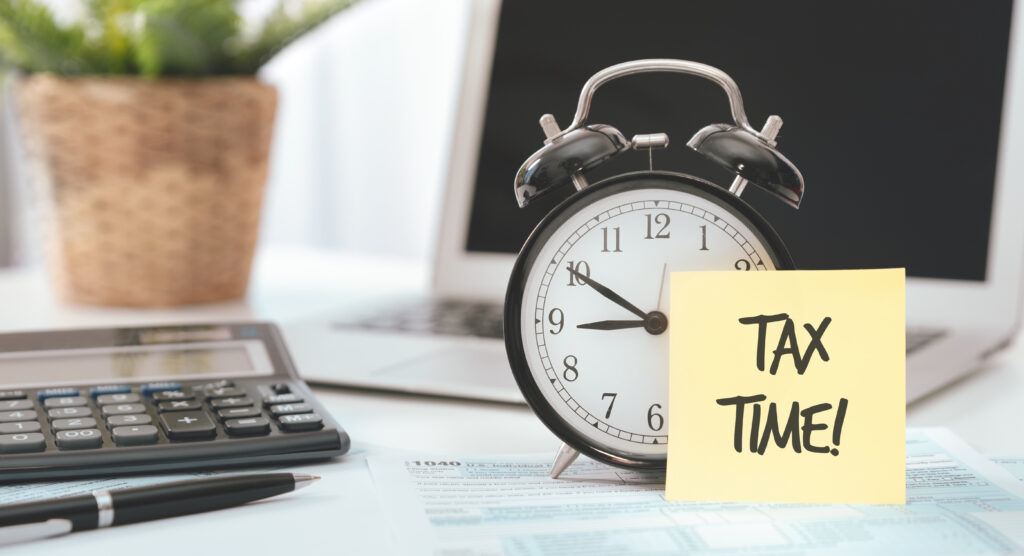
It’s January, and you’ve got four months until the April 15th deadline. Plenty of time, right? Then it’s February, and you’re still thinking about it. March arrives, and suddenly you’re mildly stressed but still not doing anything. Then it’s April 10th, you’re in full panic mode, and you’re about to make expensive mistakes because you waited until the absolute last minute.
Welcome to tax prep procrastination—the annual tradition of turning a manageable task into a financial disaster through sheer avoidance. Let’s talk about what this procrastination is actually costing you, because it’s way more than you think.
The obvious costs: penalties and interest
Let’s start with the financial damage you can measure.
If you owe taxes and file late:
The IRS doesn’t care about your procrastination struggles. Miss the deadline, and you’re hit with penalties immediately.
Failure-to-file penalty: 5% of unpaid taxes for each month you’re late, up to 25% of your total tax bill. So if you owe $3,000 and you’re three months late, that’s $450 in penalties just for not filing.
Failure-to-pay penalty: 0.5% of unpaid taxes per month. This stacks with the filing penalty, so you’re getting hit twice.
Interest on unpaid taxes: Currently around 8% annually, compounding daily. This never stops until you pay.
Example scenario: You owe $5,000 in taxes. You file six months late and pay six months late.
- Failure-to-file penalty: $1,250 (capped at 25%)
- Failure-to-pay penalty: $150 (0.5% × 6 months)
- Interest: Approximately $200
- Total additional cost: $1,600
You just paid $1,600 because you procrastinated. That’s not even including the actual taxes you owed.
If you’re getting a refund and file late:
Good news: no penalties for filing late if you’re getting money back. Bad news: you’re giving the government an interest-free loan while you wait. If you’re owed $2,000 and you file three months late, you’ve lost three months of having that money earning interest, paying down debt, or covering expenses.
In 2026, with high-yield savings accounts paying 4-5%, that $2,000 could’ve earned you about $25-30 in those three months. Not huge, but it’s your money sitting with the IRS instead of working for you.
The hidden costs: expensive last-minute mistakes
When you wait until April 10th to start your taxes, you make costly errors.
Rushed math mistakes: You’re frantically entering numbers, not double-checking, and you either overpay (losing your own money) or underpay (triggering an audit risk and potential penalties).
Missed deductions and credits: When you’re rushing, you forget things. That home office deduction? Missed it. Student loan interest deduction? Forgot about it. Charitable donations? Didn’t have time to find the receipts.
The real cost of missed deductions: If you’re in the 22% tax bracket and you miss $3,000 in legitimate deductions, you just overpaid by $660. That’s money you could’ve kept if you’d given yourself time to review everything carefully.
Paying for expensive emergency help: When you procrastinate until the last minute, you can’t shop around for tax preparers. You’re stuck with whoever has availability, and emergency tax prep services charge premium rates.
Normal H&R Block appointment in February: $200-300 for standard returns Last-minute tax prep on April 12th: $400-600+ because they know you’re desperate
Some CPAs won’t even take new clients after April 1st. The ones who do charge rush fees that can add $200-500 to your bill.
The stress tax: what procrastination does to your mental health
This cost is harder to quantify, but it’s real.
January through March: Low-level background anxiety. You know you need to do it. You’re avoiding it. It’s always there in the back of your mind, creating stress that affects your sleep, productivity, and general wellbeing.
April 1-14: Full panic mode. You’re stressed, snapping at people, losing sleep, and making mistakes in other areas of your life because you’re distracted by tax panic.
The productivity cost: All those hours you spent worrying about taxes instead of actually doing them could’ve been spent on work, side hustles, or literally anything that earns or saves money.
The opportunity costs you’re ignoring
When you file early, good things happen:
You get your refund faster: File in February, get your refund in 2-3 weeks. File in April, wait 6-8 weeks because everyone’s filing at once and the IRS is backlogged.
You can plan better: Knowing your actual tax situation early lets you adjust your withholdings, plan major purchases, or start saving strategically.
You catch problems early: If there’s an issue with your return, you have time to fix it. Last-minute filers who discover problems are scrambling to file extensions and dealing with months of uncertainty.
You can take advantage of tax-loss harvesting and other strategies: When you know your tax situation early, you can make strategic moves for the current year. Procrastinators lose these opportunities.
The extension trap
“I’ll just file an extension” sounds like a solution, but it’s not what you think.
What an extension actually does: Gives you until October 15th to file your return. That’s it.
What an extension doesn’t do: Give you more time to pay. If you owe taxes, they’re still due April 15th. You’re just delaying the paperwork, not the payment.
The problem: People file extensions thinking they’ve solved the problem, then forget about it until October, panic again, and now they’re paying penalties and interest for six additional months.
Extensions work for people who are organized and need more time to gather complex documents. Extensions don’t work for procrastinators who are just avoiding the task.
How to break the procrastination cycle
The solution isn’t motivation—it’s systems.
Start in January, not April: As soon as you get your W-2s and 1099s (which arrive by January 31st), put them in one folder. You’re not doing your taxes yet, just collecting documents. This takes five minutes.
Block two hours in February: Pick a date, put it on your calendar, and do your taxes (or at least start them). Two hours is usually enough for most people with straightforward returns.
Use software with carryover: TurboTax, H&R Block, and others save your info from last year. Most of it auto-fills. You’re not starting from scratch—you’re updating numbers.
Hire a CPA in January: If your taxes are complex, book a CPA appointment in January or early February. You’ll get better service, lower prices, and no rush fees.
Automate document collection: Set up a system where tax documents automatically go to one email folder or physical location throughout the year. Come tax time, everything’s already organized.
The reality check
Tax procrastination isn’t a personality quirk—it’s a expensive habit that costs you hundreds to thousands of dollars annually through penalties, missed deductions, rush fees, and lost refunds.
The task you’re avoiding takes 1-3 hours for most people. You’re spending weeks being stressed about something that takes an afternoon to complete. That’s not a time management problem—it’s a priorities problem.
The bottom line
File early, file accurately, and stop letting the IRS profit from your procrastination. The money you save in avoided penalties, caught deductions, and reduced stress is worth way more than the temporary discomfort of actually doing your taxes.
Your April self—the one who isn’t frantically googling “emergency tax prep near me” at 11 PM on April 14th—will thank you. So will your bank account.
Stop procrastinating. The deadline hasn’t changed in decades, and it’s not going to start accommodating your avoidance patterns. Get it done early, get it done right, and spend April doing literally anything other than panicking about taxes.